
Events with around 100 participants can take many forms and purposes, including in-house training sessions, award ceremonies, networking events with business partners, seminars, and conferences. The sheer number of attendees significantly increases the difficulty of venue selection, as factors such as venue size, facilities, and the availability of meals and accommodation become much more critical.
On the other hand, since a 100-person event is considered "medium-sized," we often hear complaints that it can be either too large or too cramped depending on the venue, making it difficult to find a facility that is "just the right size."
This article is for those planning and organizing an event with around 100 attendees. We'll provide a clear and concise overview of key points to consider when choosing a venue, common mistakes, and the characteristics of different types of facilities.
The success of an event begins with choosing the right venue. Even if you haven't yet decided on a specific location, please use this as a guide for your selection and comparison process.
table of contents
- What is an event with 100 attendees? What kind of venue is suitable?
- Five key points to consider when choosing a venue
- Common mistakes and points to note
- What type of venue is best suited for an event with around 100 people?
- The ideal venue that meets all the requirements: SEAGAIA Miyazaki is an option.
- Summary | The success of an event with 100 or more attendees depends on "venue selection".
What is an event with 100 attendees? What kind of venue is suitable?
An event expecting around 100 participants falls somewhere in between "small" and "large." For an event of this size, venue selection is crucial to its success.
It's crucial that the venue offers not only enough space for participants to be comfortable, but also that its atmosphere and functionality align with the event's purpose. For example, seminars and training sessions require a space designed for concentration and an optimal sound environment, while events including social gatherings require catering and flexibility in layout changes.
Examples of events with around 100 participants include:
- Internal kick-off meetings and award ceremonies
- New product launch event and media briefing
- Seminars and study sessions organized by companies and organizations
- Inter-industry networking events and industry-specific networking events
- Team-building event combining training trips and company trips.
What these events have in common is that they require not only "information sharing" but also elements such as "interaction" and "impression building." Choosing a venue that is comfortable for participants and easy for organizers to manage will significantly improve the quality of the event.
Furthermore, while a 100-person event offers a high degree of freedom in terms of staging and program design, it's also prone to giving the impression of being either "sparse" or "cramped" if the venue's "spatial balance" is misjudged. The ideal venue is one that offers both a suitable amount of space for the number of attendees and a comfortable environment for participants.
Five key points to consider when choosing a venue
To successfully organize an event for 100 people, it's crucial to choose a venue not just based on appearance or price, but from a comprehensive perspective that includes functionality and operational aspects. Here are five key points to keep in mind.
1. The venue size and ceiling height should be "with ample space" as a basic rule.
Even for an event with around 100 people, the required space varies depending on the layout and content. For example, a seminar in a classroom style (with desks) would require at least 150-200 square meters, while a standing reception would need a bit more space.
Furthermore, ceiling height significantly impacts the sense of spaciousness and ease of staging in a venue. If you plan to use projectors, stage lighting, or decorative effects, it's recommended to choose a venue with a ceiling height of 3 meters or more.
2. Confirm whether the sound, video, and lighting equipment is "permanently installed".
For events with around 100 people, AV equipment such as microphones, speakers, projectors, and screens are almost essential. Some venues may only have some of these items, or may require separate rentals, so it's best to check in advance.
Of particular importance is the availability and scope of services provided by sound operators. Even if the equipment is available, venues without operational support will require the external hiring of specialist staff, increasing operational costs and effort.
3. Choose access and accommodation from the participants' perspective.
Access to the venue is a major factor influencing participant satisfaction. Consider ease of transportation, such as whether it's within walking distance of public transport, whether there's a shuttle bus, or if it's in a rural area, whether travel from the airport is smooth.
Furthermore, if the event involves overnight stays or has many participants coming from far away, the availability of nearby accommodations is also an important point. Ideally, having a hotel in the same building as the venue or on the same premises would reduce the burden of travel and significantly lessen participants' stress.
4. Can social gatherings and meals be held within the venue?
If you are planning a social gathering or networking event after the main event, check whether it can be held on the same venue or premises. Moving to a different venue raises concerns about travel time, weather conditions, and the possibility of participants leaving the venue.
Recently, more venues are offering restaurants and banquet halls on-site, allowing for a seamless program to be conducted without the need for travel. The flexibility of their catering services is also something to check.
5. The operational support system on the day of the event is also something not to be overlooked.
It's often overlooked, but the availability and quality of operational support from the venue is also an important factor to consider. Whether or not there are staff members who can help with on-site issues such as setup, equipment configuration, preparing the MC's waiting room, and sudden layout changes makes a big difference in your peace of mind on the day of the event.
A venue that acts as a "partner in making the event a success" will ultimately lead to higher overall satisfaction than a venue that simply "rents out the space."
Thus, for events with around 100 people, the key to choosing a venue lies not only in having the "just right" size and facilities, but also in whether everything is well-organized, from transportation and meals to support systems.
Common mistakes and points to note
Events with around 100 attendees often suffer from unexpected problems and participant dissatisfaction due to venues chosen somewhat haphazardly. Here, we'll introduce some common mistakes and points to keep in mind to prevent them.
The venue was too small and felt claustrophobic.
Even if enough seats are provided, the space may feel cramped due to insufficient room for movement during breaks, setting up handouts, and reception areas. This is especially true when setting up a classroom-style layout or exhibition booths, where the size must be considered in terms of seating capacity, traffic flow, and available space.
countermeasure
Instead of aiming for an area that can accommodate exactly 100 people, plan for a layout with at least 1.5 times that floor space to allow for ample room.
There were problems with the sound and video equipment, which hindered the smooth progress of the event.
Equipment problems such as insufficient projector output making the screen difficult to see, inability to adjust microphone volume, or uneven speaker placement can significantly impact participants' concentration and overall impression.
countermeasure
Before using the equipment, check whether it's permanently installed, available for rent, and if operational support is provided. If possible, conduct a site visit and test beforehand.
The venue and the accommodation/social gathering venue were far apart, causing participants to get lost.
When events and accommodations are held at separate facilities, or when social gatherings require walking, it's easy for participants to experience delays due to weather, physical exertion, and time constraints. This can be particularly stressful for participants from distant locations who are unfamiliar with the area.
countermeasure
Choosing a venue where accommodation and social gatherings can be held in the same building or on the same premises provides peace of mind. It eliminates the hassle of travel and improves operational efficiency.
The venue staff were impersonal and it was difficult to respond flexibly to the situation.
In some cases, organizers become confused when the venue doesn't respond flexibly to problems or minor requests on the day of the event. Depending on the venue, they may only "rent out the space" and provide almost no support on the day.
countermeasure
During the pre-event meeting, be sure to confirm the support system, whether there are on-site staff, and how to contact them on the day of the event. A venue with extensive experience in handling MICE and corporate events will provide greater peace of mind.
Thus, precisely because of this ideal size of around 100 people, even a "small discrepancy" can lead to a significant difference in impression or operational problems.
When choosing a venue, it's important to select one while carefully simulating the flow of events on the day.
What type of venue is best suited for an event with around 100 people?
Events with around 100 attendees require a wide range of functions depending on the number of participants and the program content. Therefore, understanding and selecting the right venue based on its "type" becomes crucial. Here, we introduce three representative venue types and compare their respective advantages and disadvantages.
1. Urban multi-purpose halls and rental Meeting Rooms
Multipurpose halls and rental Meeting Rooms located in city centers or near train stations are attractive due to their convenient access and wide variety of venues. They are often available at relatively reasonable rates, making them suitable for short-term, single-purpose events such as day seminars and presentations.
However, it's important to note that these events often lack on-site accommodations or reception venues, resulting in increased travel time for participants, and that facilities and support may be limited.
2. Conference facilities attached to a hotel
Hotel-style venues, where Meeting Rooms and accommodation/dining spaces are located within the same facility, offer excellent operational efficiency. The well-equipped facilities and the presence of MICE-certified staff provide peace of mind, which is another advantage.
On the other hand, the atmosphere of these venues tends to be somewhat formal, which can feel a bit stiff for events seeking a more casual setting. Also, hotels in urban areas tend to be highly competitive to book, and costs can be higher.
3. Resort-type and suburban-type MICE facilities
Resort-style facilities that leverage nature and a sense of escape from everyday life are ideal for events where you want to maximize participant satisfaction. By combining meetings and training sessions with hot springs, golf, and other activities, you can create a truly memorable event.
While travel times may be longer compared to urban areas, making it essential to check access methods, this disadvantage can be minimized if the facility is located near an airport. It is frequently chosen for training trips with incentive elements, anniversary events, and employee events bringing together staff from across the country.
The ideal venue that meets all the requirements: SEAGAIA Miyazaki is an option.
To successfully organize an event with 100 attendees, it's essential to consider not only the size and facilities of the venue, but also overall convenience, including access, accommodation, and the flow of attendees during the reception.
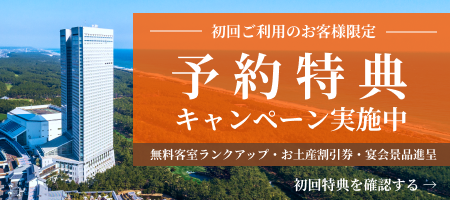
The resort that fulfills all of these requirements at a high level is" PHOENIX SEAGAIA RESORT" in Miyazaki Prefecture.
Located in a prime location just about 30 minutes by car from Miyazaki Airport, the facility offers a venue suitable for medium-sized conferences, on-site accommodation, a reception area, and even resort activities.
Providing a one-stop service for conferences, accommodation, and networking reduces the burden on both organizers and participants, enabling highly satisfying event management.
Furthermore, the availability of dedicated MICE-focused staff provides comprehensive support, making it a great advantage to be able to consult with them with confidence from the planning stage onwards.
Summary | The success of an event with 100 or more attendees depends on "venue selection".
For events with around 100 attendees, the ideal size—neither too small nor too large—means that effective use of space and ease of management are key to success.
Beyond just the size and facilities of the venue, factors such as accessibility, the flow of accommodation and meals, and the staff support system all work together smoothly to significantly improve both participant satisfaction and operational efficiency.
Taking into account the points discussed in this article, when considering potential locations and venues, it's important to also consider "how much of the overall event can be entrusted to them." This perspective will help you choose a venue you won't regret.
If you're having trouble choosing a venue, please consider a location like PHOENIX SEAGAIA RESORT, which offers nationwide accessibility, the convenience of having meetings, accommodations, and receptions all in one place, and the opportunity to experience something out of the ordinary.
This should allow us to create a memorable event for both participants and organizers.
Written by: PHOENIX SEAGAIA RESORT MICE Editorial Department
A specialized team supporting MICE events such as corporate meetings, training sessions, and award trips. We share information about the attractions of Miyazaki and help you choose the perfect venue.